5 Signs Your Consumer Unit Needs Replacing in Upminster
Published
· Volt East Group
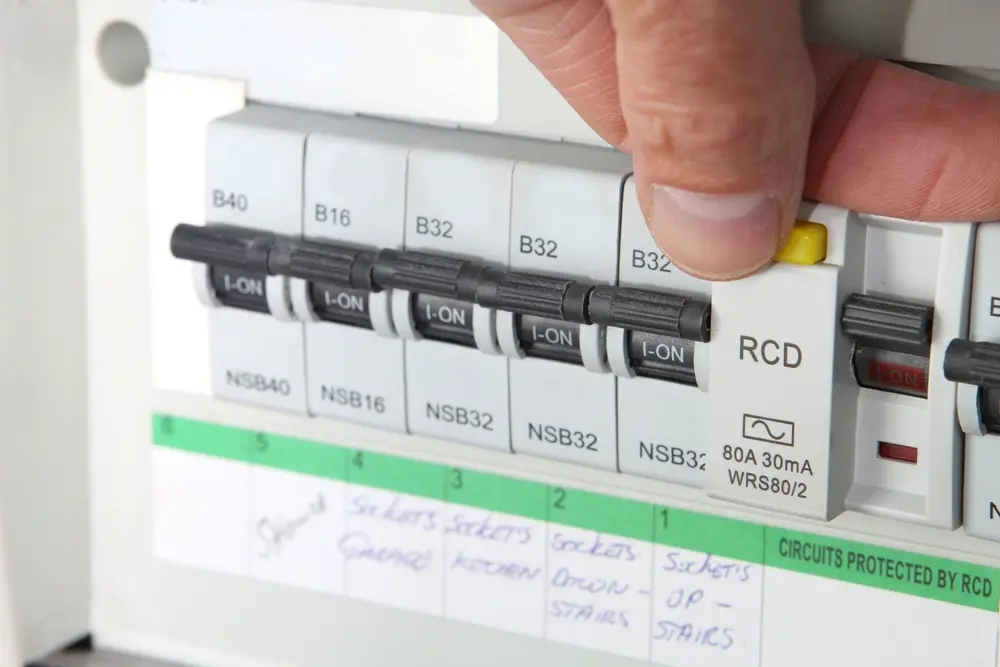
If you are wondering whether your consumer unit needs replacing, chances are something has already put the thought in your head.
Maybe the power keeps tripping. Maybe the board looks ancient. Maybe you are planning a kitchen refit or an EV charger and someone has mentioned the fuse box might not be up to it.
That instinct is usually worth listening to.
A consumer unit is the part of your electrical installation that controls and protects the circuits in your home. Modern units use devices such as circuit breakers and RCDs or RCBOs to cut power quickly if a fault is detected, which helps reduce the risk of electric shock and fire. NICEIC’s homeowner guide to consumer units explains the different protection devices found in modern boards, and Electrical Safety First’s guide to RCDs notes that fixed RCDs installed in the consumer unit provide the highest level of protection for wiring, sockets and connected appliances.
For plenty of homes in Upminster, the consumer unit is quietly doing its job in the background. But when it starts showing its age, or when the rest of the house has moved on and the board has not, it can become the weak point in the system.
What counts as a consumer unit problem?
Not every older board needs replacing tomorrow. Electrical Safety First’s best practice guidance is clear that a consumer unit does not need to be replaced purely because it lacks built in RCD protection if that protection can be provided another way, and some older boards can still offer satisfactory overcurrent protection. But where the board is outdated, damaged, poorly located, or tied to wider safety issues in the installation, replacement can become the sensible and sometimes necessary option.
So the real question is not just "is it old?" It is "is it still safe, suitable and practical for the way the home is used now?"
1. You still have an old style fuse box
This is the most obvious sign.
If your home still has rewireable fuses, an old board with no modern labelling, or something that looks like it belongs in another decade, it is worth having it assessed. Electrical Safety First’s periodic inspection guidance says the suitability of the switchgear and controlgear is one of the things checked during an inspection, and specifically notes that an old fuse box with a wooden back, cast-iron switches or a mixture of outdated gear will need replacing.
NICEIC’s consumer unit guide also explains that modern boards are designed around circuit breakers and additional protective devices such as RCDs and surge protection, which is a very different level of convenience and safety compared with old rewireable fuse setups.
That does not mean every older board is dangerous the second you look at it. But it does mean you are more likely to be missing safety features that are now considered normal in modern homes.
2. Your circuits keep tripping and no one knows why
A breaker that trips once because you overloaded a circuit is one thing. A board that keeps tripping with no clear pattern is another.
Modern circuit breakers are supposed to disconnect power when there is an overload or short circuit. NICEIC explains that this is exactly what circuit breakers are there to do, and they react faster than traditional fuses. So if a circuit is repeatedly tripping, that is not the board being awkward. It is the system telling you something needs investigating.
Sometimes the fault is an appliance. Sometimes it is damaged wiring. Sometimes it is a consumer unit that is no longer coping well with the demands being placed on it. If this sounds familiar, Volt East’s guide to common electrical problems in London homes and how to fix them safely is a useful next step because repeated tripping, flickering lights and nuisance faults often show up together.
3. You have noticed heat, buzzing, burning smells or scorch marks
This is the sign people most regret ignoring.
Electrical Safety First’s advice on overloading sockets says hot plastic smells, sparks, smoke, and blackness or scorch marks around a socket or plug are danger signs that should not be brushed off. HSE guidance also advises that where there is evidence the supply may not be safe, such as damaged equipment or wiring, it should not be used until it has been corrected.
Those warnings are not limited to sockets. If the area around the consumer unit feels unusually warm, you hear buzzing, or you can see signs of scorching, stop treating it like a small annoyance. It needs checking properly.
This is especially true in homes where additional circuits have been added over time and the board has become a bit of a patchwork job.
4. Your EICR is flagging issues or your board lacks modern protection
A lot of consumer unit replacements start with an inspection, not an emergency.
An EICR checks the condition of the fixed electrical installation and helps identify faults, deterioration and outdated protective measures. Volt East’s own EICR page explains that the report will show whether the installation is satisfactory or unsatisfactory, and NICEIC notes that the process is designed to pick up wear, damage and defects that may put people at risk.
This is often where missing or inadequate protection comes to light. Electrical Safety First’s wiring regulations guidance says BS 7671 expects most, if not all, domestic circuits to have RCD protection. If your current board does not provide that properly, or if it is part of a wider set of coded issues, replacement may be the cleanest route to getting the installation into a safer state.
In other words, the consumer unit is not always replaced because it is visibly falling apart. Sometimes it is replaced because the inspection shows it is the main thing holding the installation back.
5. You are planning bigger upgrades and the board is no longer suitable
This one catches a lot of homeowners out.
You might not have a clear fault today, but if you are adding an EV charger, redoing the kitchen, building an office in the garden, or modernising lighting throughout the house, your existing board may simply not be the right foundation anymore.
Consumer unit replacement is also not just a casual swap. NICEIC states that installing or replacing a consumer unit is notifiable work under Part P of the Building Regulations in England and Wales. That means it needs to be carried out and certified correctly. GOV.UK’s Approved Document P guidance also sets out that the current rules explain when notification is required for domestic electrical work.
So if you are already planning wider lighting and electrical installation work, it often makes sense to look at the consumer unit at the same time instead of upgrading everything around an outdated board.
Does an old consumer unit always need replacing right now?
Not always, and this is where honest advice matters.
There is a difference between "older than ideal" and "unsafe or unsuitable." Some older boards may still be serviceable in the short term, especially if they have been inspected and the rest of the installation is in good condition. Electrical Safety First’s best practice guidance specifically warns against blanket advice that every non-RCD board or every plastic enclosure has to be changed automatically.
That said, if the board is tied to repeated faults, missing protection, visible damage, or planned upgrades, waiting rarely makes things cheaper or easier.
What usually happens next?
In most cases, the sensible order is:
First, get the installation assessed properly
If the signs are there but the cause is not clear, start with testing. That could mean fault finding, or it could mean a full EICR depending on the age and condition of the system. HSE recommends arranging inspection and testing of fixed wiring to reduce the risk of deterioration leading to danger.
Then decide whether repair, improvement or replacement makes more sense
Sometimes the answer is not a new board at all. Sometimes the problem sits on one circuit, or with earthing, bonding or damage elsewhere. Other times, replacing the consumer unit is the most practical way to bring the system up to a safer and more usable standard.
Make sure the paperwork is done properly
Because replacing a consumer unit is notifiable work, certification matters. NICEIC advises that homeowners may later need the certificate to show compliance with Part P, and replacement copies can be traced where needed.
A practical rule of thumb for Upminster homeowners
If your board is old but everything is working perfectly, book an inspection before assuming the worst.
If your board is old and you also have tripping circuits, signs of heat, patchy previous alterations, or plans for bigger upgrades, it is time to stop guessing and have it looked at properly.
That approach tends to save money, save hassle and avoid the classic mistake of spending on new electrics elsewhere while the main board is still the weakest link.
Final thoughts
The five signs are fairly simple:
you still have an old style fuse box
circuits trip repeatedly
you have heat, smells, buzzing or scorch marks
an inspection is flagging missing protection or wider safety issues
your home upgrades are asking more of the board than it can sensibly provide
If one or two of those are sounding familiar, it is worth acting before it turns into a bigger problem. A consumer unit does not have to look dramatic to be outdated, and waiting for a full failure is rarely the smart point to deal with it.
For many homeowners in Upminster, the best next step is not jumping straight to replacement. It is getting the right diagnosis first, then upgrading if the board is genuinely the issue.
Plan your next project with Volt East
Use our practical guides to prepare the brief, then speak to Volt East about electrical installation, lighting design, security or smart-home work across Romford, Essex and London.