Pendant Lighting in 2026: How to Plan Statement Lighting Before You Spend
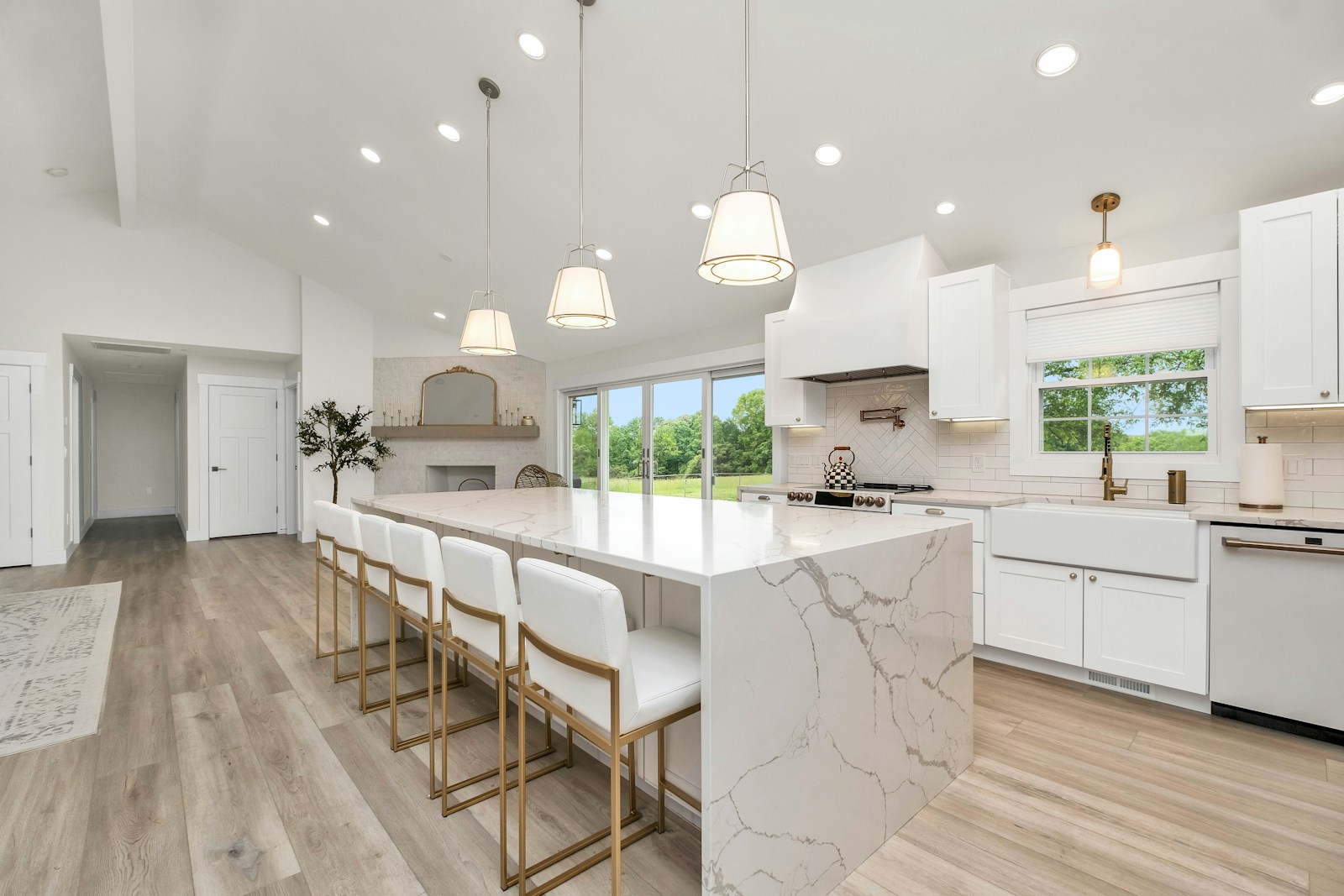
Table of Contents
No anchors found on page.
You can usually tell when pendant lighting has been chosen too late in a project.
The fitting might be lovely. The room might be expensive. The kitchen might be beautifully finished. But the pendants sit a little too high, or too low, or too close together, or not quite where the island feels centred. The light output is wrong for the room, the surrounding lighting is doing something different, and the whole thing feels slightly off.
That is normally not a product problem. It is a planning problem.
And that is exactly why pendant lighting is one of the clearest examples of where lighting design adds real value before large money is committed.
The short answer
If you are investing properly in a renovation, extension, fit-out or higher-spec room upgrade, pendant lighting should not be treated as a last-minute decorative choice.
It works best when it is planned as part of the wider lighting scheme, not bolted on at the end.
That means thinking about the scale of the fitting, the drop height, the brightness, the beam spread, the way it sits within the room, and how it works alongside task lighting, ambient lighting and controls. That is the kind of thinking that sits behind CIBSE’s latest LG23 guidance on the lighting design process (https://www.cibse.org/policy-advocacy/news/new-lighting-guide-lg23-design-creativity-and-compliance/), and it is exactly where Volt East’s lighting design (/lighting-design) approach becomes useful before the spend starts getting serious.
Why pendant lighting is having such a moment
Pendant lighting is one of those categories that keeps showing up because it does two jobs at once.
It gives people a feature. But it also solves a practical problem.
A well-planned pendant can anchor a kitchen island, bring focus to a dining table, create drama in a stairwell, soften a bedroom corner, or help a reception or hospitality space feel more polished. That is why it keeps performing well in search. It is not only aesthetic. It is tied to real project decisions.
The catch is that pendant lighting only feels effortless when quite a lot of thought has gone into it first.
Where pendant lighting usually works best
Pendant lighting is strongest when it is doing something clear in the room.
That could be:
• defining an island or breakfast bar
• creating a focal point over a dining table
• bringing scale into a double-height entrance or stairwell
• softening a bedroom or dressing area
• adding character to a reception, retail or hospitality space
• introducing feature lighting as part of a broader interior lighting design scheme
The mistake is assuming that because the fitting looks beautiful on its own, it will automatically work in the space.
That is where design comes in.
The real risk is not choosing the wrong pendant
It is committing to the wrong lighting plan around it.
That is the part people do not always see until it is too late.
A pendant might look perfect in isolation, but the room still fails if:
• the drop height is awkward
• the fitting blocks sightlines
• the light is too harsh or too weak
• the colour temperature fights the rest of the room
• the surrounding downlights are overdone
• the switching logic is clumsy
• the pendant is trying to do a job better handled by layered lighting
In other words, pendant lighting is rarely the whole scheme. It is one part of it.
That is why Volt East’s lighting and electrical installation (/services/lighting-and-electrical-installation) work makes more sense when it starts with a design conversation rather than a fittings list.
Good pendant lighting usually starts with a few better questions
Not “which fitting do you like most?”
The better questions are usually:
• What is this light meant to do?
• Is it decorative, functional, or both?
• What happens in this part of the room during the day and at night?
• Does the space need one statement fitting or a group?
• Is the pendant the hero, or is it supporting the rest of the room?
• Do you want it to work with dimming or smart scenes?
Once those answers are clearer, the fitting choice gets much easier.
LED lighting design matters more than people expect
This is where a lot of people still oversimplify things.
Yes, most modern pendant lighting will naturally sit within an LED lighting design scheme. And yes, that is usually the right direction. The Energy Saving Trust’s lighting guidance (https://energysavingtrust.org.uk/advice/lighting/) makes clear why LED lighting is the default for modern efficiency.
But good LED lighting design is not just about choosing efficient sources. It is about choosing the right light quality, the right output and the right balance across the room.
That matters because a pendant that is technically efficient can still make the room feel wrong if the lighting design around it is weak.
Smart lighting makes pendant lighting more useful, not just more modern
Pendant lighting often becomes much more valuable when it is tied into smart lighting properly.
That might mean:
• dimming the pendants in the evening
• grouping them with under-cabinet lighting in a kitchen
• setting different scenes for dining, entertaining and cleaning
• controlling feature lighting separately from task lighting
• building simple automation into the wider room
This is where people often ask themselves, quite reasonably, whether smart lighting is genuinely worth it.
Usually, it is when it solves a real use problem.
If the room changes character through the day, smart control can make the pendant lighting far more flexible. And with Matter now designed to improve interoperability across smart home ecosystems (https://csa-iot.org/all-solutions/matter/) and Apple’s Home app supporting Matter lights (https://support.apple.com/en-gb/102135), the setup side is less awkward than it used to be. If that side of the project matters, Volt East’s home automation (/home-automation) offering is the natural next step.
Pendant lighting should sit inside the wider lighting design
This is the point that usually saves people money.
A pendant should not be designed in isolation from:
• task lighting
• ambient lighting
• wall lights
• joinery lighting
• architectural lighting
• circulation light
• switching and dimming
• exterior and landscape lighting if the room connects outside
That is where the value of design support becomes obvious.
The same thinking that helps position a pendant over an island also helps decide whether a stair detail needs architectural lighting, whether the garden view needs softer landscape lighting, or whether the whole room is already being over-lit elsewhere.
This matters even more on expensive projects
The higher the spend, the less sense it makes to guess.
That is especially true where the project includes:
• bespoke joinery
• stone or statement worktops
• open-plan kitchens
• dining zones
• stair voids
• reception areas
• hospitality interiors
• premium finishes
• integrated controls
• multiple lighting layers
At that point, pendant lighting is not just a decorative afterthought. It is part of how the room is experienced.
And if the room is central to the whole project, getting the pendant lighting wrong can make the investment feel less considered than it should.
It is also worth remembering the install side
This is still electrical work, not just styling.
So while the design side decides what should happen, the installation side still has to be safe, practical and properly certified. Electrical Safety First’s Part P guidance (https://www.electricalsafetyfirst.org.uk/find-an-electrician/part-p/) is a useful reminder that domestic electrical work should be handled properly and by the right people.
That is one reason Volt East can speak credibly about both the design side and the delivery side. A pendant only really works when the visual idea and the installation reality line up.
Where Volt East fits in
Volt East’s updated website now gives space to Lighting Design, and this is exactly the sort of topic that shows why that matters.
For projects where clients want more confidence before spending heavily, design input helps them:
• test the layout
• understand the likely feel of the space
• compare fitting approaches
• assess pendant positioning and scale
• decide where LED lighting and controls should sit
• avoid expensive changes later
• commit to the scheme with a clearer idea of the outcome
That can be valuable on homes, commercial interiors and more design-led renovations where the lighting has to do more than simply “be there”.
A simple rule of thumb
If you are only swapping one like-for-like fitting, you probably do not need a full lighting design process.
But if the pendant lighting is part of a wider room upgrade, a renovation, a kitchen project, a fit-out, or anything with multiple layers of lighting and real money attached, it is worth planning properly before the purchases are made.
That is the point where lighting design stops being a nice extra and starts being a sensible form of project protection.
Final thoughts
Pendant lighting is popular for a reason. It can transform a room, add identity, define space and give a project real character.
But it is also one of the easiest things to get slightly wrong in a way that keeps annoying people long after the room is finished.
That is why the better approach is not to pick a fitting first and hope the rest works around it. It is to use lighting design to make smarter decisions before the big spend happens.
For Volt East, that is a strong message to put behind the new Lighting Design page. Clients do not just get a fitting installed. They get a chance to think through the result before they commit to it.