EPC Reform 2026: Why Smart Readiness Matters for UK Homes

Table of Contents
No anchors found on page.
There is a new phrase starting to appear in the UK home energy conversation: Smart Readiness.
It sounds a little technical at first. Maybe even a bit vague. But the idea behind it is actually quite practical.
A home is no longer being judged only by how well it holds heat or how much energy it costs to run. Increasingly, the question is also becoming: how ready is this home to use energy intelligently?
That matters because more UK homes are moving toward electric systems, smart controls, EV charging, LED lighting, solar, batteries and flexible tariffs. A house that can manage energy well is starting to look very different from one that simply uses less energy in the traditional sense.
What is changing with EPCs?
Energy Performance Certificates, usually called EPCs, are being reformed.
The current EPC system gives homes a single rating, but the new direction is more detailed. Under the proposed Home Energy Model approach, future domestic EPCs are expected to include several headline metrics rather than relying on one overall score.
One of those metrics is Smart Readiness.
In simple terms, this is about whether a home can work with smarter energy technologies. That could include generating energy, storing energy, using electricity at better times of day, or controlling systems more efficiently.
So instead of only asking, “How efficient is this home?” the newer conversation also asks, “Can this home respond intelligently to modern energy use?”
Why Smart Readiness matters
This is where the topic becomes relevant for real homeowners, not just energy policy.
Smart Readiness matters because homes are becoming more electrical and more connected.
That might mean:
smart heating controls
LED lighting upgrades
lighting automation
app-based control
EV charging readiness
solar and battery storage in some homes
smart meters and flexible tariffs
better zoning and scheduling
None of these things are complicated on their own. But once they start working together, the electrical setup behind the home becomes much more important.
A home with smart controls, good lighting design and future-ready wiring can be easier to live in, cheaper to manage and better prepared for future upgrades.
This is not just about gadgets
This is the bit worth making clear.
Smart Readiness does not mean filling a home with devices for the sake of it.
A smarter home should not feel more complicated. It should feel easier.
The best smart upgrades usually solve ordinary problems. Lights that are always left on. Heating that runs when nobody is home. Outdoor lighting that needs manual switching. A kitchen with one harsh lighting setting. An EV charger that could work better with off-peak charging. A home office that has been added without thinking about sockets, lighting or control.
That is what smart home planning is really about.
Not novelty. Better control.
LED lighting is one of the easiest starting points
Lighting is still one of the simplest places to start improving how a home performs.
A lot of UK homes have already moved away from older halogen lamps, but many still have a mix of old fittings, poor switching and rooms that are either over-lit or badly zoned. The Energy Saving Trust says replacing remaining halogen spotlights with LED lighting can save around £45 a year in Great Britain, and switching lights off when leaving a room can save around £7 a year.
That might not sound huge on its own, but lighting becomes more powerful when it is combined with better control.
For example:
dimming living spaces in the evening
separating kitchen task lighting from mood lighting
using sensors in utility rooms or hallways
scheduling outdoor lighting
grouping lights by zone rather than by old switch positions
That is where LED lighting stops being just a bulb upgrade and becomes part of a smarter home setup.
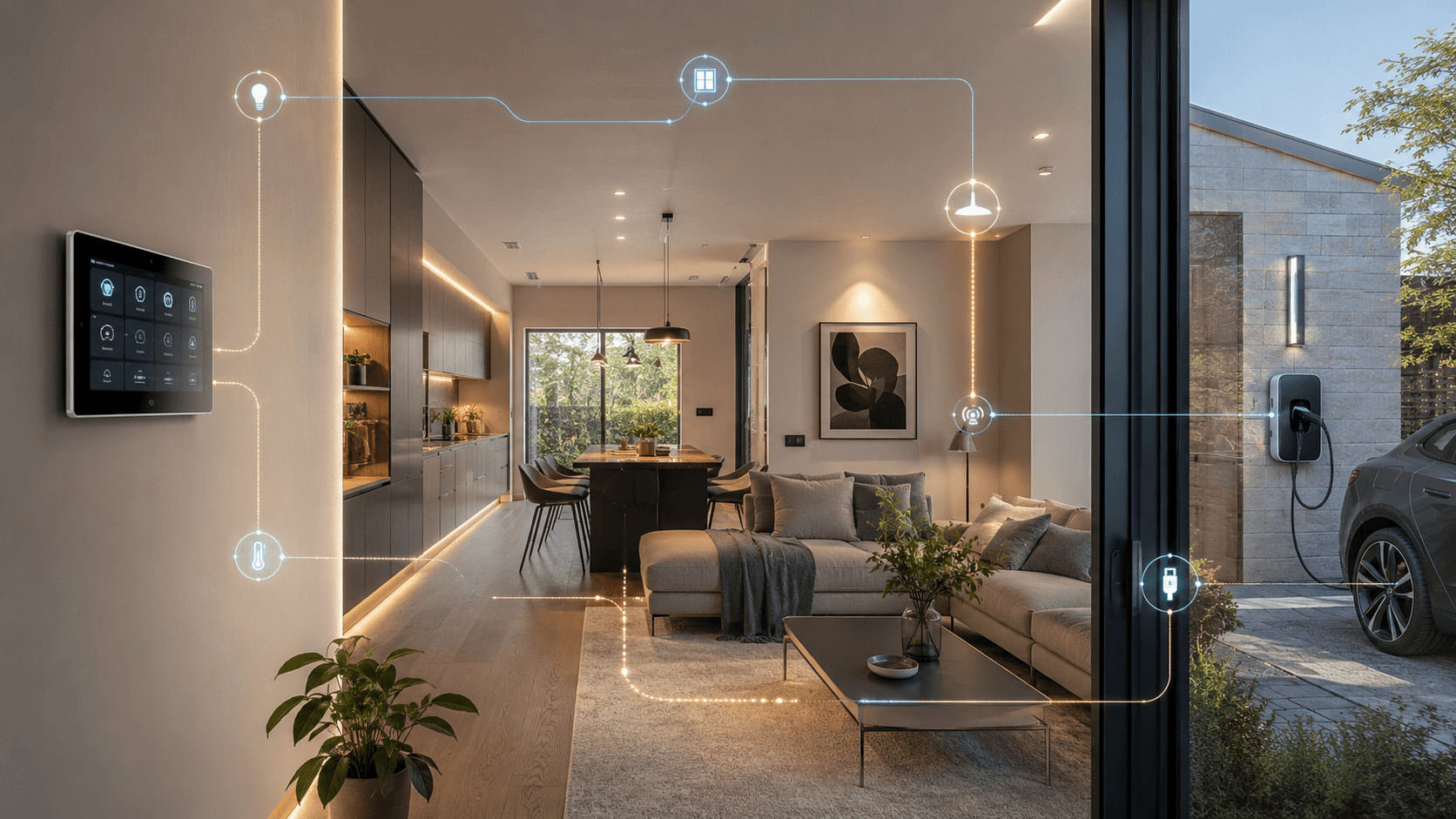
Smart controls can reduce wasted energy
This is where Smart Readiness starts to make sense in day-to-day life.
A home can have efficient products and still waste energy if everything is controlled badly.
Lights left on. Heating running at the wrong time. Rooms heated or lit when nobody is using them. Outdoor lighting running all night when a schedule would do the job better.
Smart controls help reduce that waste by making the home respond more sensibly. That might be through timers, sensors, dimming, app control or grouped scenes.
The important thing is to choose controls around how the home is actually used.
A busy family home may need simple, reliable scenes. A renovated kitchen may need several lighting layers. A home office may need better task lighting and socket planning. A property preparing for EV charging may need the consumer unit and load planning checked properly.
Different homes need different answers.
EV charging readiness is part of the wider picture
EV charging is another reason Smart Readiness matters.
A home charger is not just a box on the wall. It is part of the home’s electrical system. Before installing one, the property needs to be assessed properly, including parking, cable route, consumer unit suitability and overall electrical demand.
As more households move toward electric vehicles, homes that are ready for EV charging will naturally feel more future-proof.
That does not mean every home needs a charger right now. It does mean electrical planning should look ahead. If you are already upgrading lighting, controls or the consumer unit, it makes sense to think about what the home may need in the next few years too.
The consumer unit and wiring still matter
This is the less glamorous part, but it is important.
Smart controls and future-ready upgrades depend on the basics being right.
If the consumer unit is old, circuits are overloaded or previous work has been added in stages without much planning, it becomes harder to add new technology cleanly. A smarter home still needs safe, reliable electrical infrastructure behind it.
That is why electrical inspections, consumer unit upgrades and proper circuit planning often sit quietly behind better energy performance.
Before adding more technology, it is worth asking:
is the existing electrical system in good condition?
are circuits suitable for the way the home is now used?
is there enough capacity for future upgrades?
are lighting zones planned properly?
will controls be simple enough for people to use every day?
This is where practical electrical planning matters just as much as the smart products themselves.
What Smart Readiness could mean for landlords
Landlords should pay attention to this topic too.
EPC rules have always mattered in the rental market, and the new direction suggests homes may increasingly be assessed in a more rounded way. Fabric performance and heating systems will still matter, but Smart Readiness introduces a newer kind of thinking.
That means rental properties may need to show more than basic efficiency over time. Smart meters, smart controls, energy flexibility and future-ready electrical upgrades could become more important when landlords plan improvements.
For landlords, the practical takeaway is simple: do not only think about the cheapest route to an EPC improvement. Think about what will make the property easier, cheaper and more suitable to run in the years ahead.
What Smart Readiness could mean for homeowners
For homeowners, this topic is less about ticking a compliance box and more about planning sensibly.
If you are renovating, updating lighting, adding home automation, replacing controls or preparing for EV charging, Smart Readiness gives a useful way to think about the project.
Ask yourself:
will this upgrade make the home easier to control?
will it reduce wasted energy?
will it support future electric systems?
will it improve how the home feels day to day?
will it work with other systems later?
That kind of thinking can help avoid upgrades that look good in isolation but do not really improve how the home performs.
Smart home upgrades should be designed around real life
The best setups usually feel simple.
A kitchen scene for cooking. A softer evening scene. Outdoor lighting that works on a schedule. A hallway light that comes on when needed. Heating that can be controlled sensibly. EV charging that fits around tariffs and household demand.
None of that needs to feel over-engineered.
The goal is not to create a home that needs a manual. The goal is a home that quietly behaves better.
That is where services like home automation, lighting design, lighting and electrical installation and EV charging installation naturally overlap. They are not separate conversations anymore. They are different parts of the same future-ready home.
Common mistakes people make
A few come up again and again.
Buying smart devices before planning the system
This often leads to too many apps, poor compatibility and controls that nobody uses properly.
Treating lighting as only a product decision
Good LED lighting helps, but layout, zoning and control make the bigger difference.
Ignoring the consumer unit
A home cannot become future-ready if the electrical foundation is struggling.
Making everything too complicated
A smart home should be easier to use, not harder.
Waiting until after renovation work has started
Smart controls, lighting design and EV readiness are much easier to plan before walls are closed and ceilings are finished.
Final thoughts
EPC reform and Smart Readiness show where UK homes are heading.
The future of home energy is not just about insulation or efficient heating. It is also about whether the home can use energy more intelligently.
That makes smart controls, LED lighting, lighting design, EV charging readiness and electrical planning much more important in 2026.
For homeowners and landlords, the message is straightforward. Do not only think about what your home uses today. Think about how it will need to work tomorrow.
A home that is easier to control, better prepared for electrical upgrades and designed around real daily use is likely to be better placed for the next stage of the UK energy transition.
Suggested internal links to add in CMS:
Home Automation
Lighting Design
Lighting & Electrical Installation
EV Charging Installation
EICR Testing