Smart Lighting Installation: Boost Comfort, Energy and Control This Winter
Published
· Volt East Group
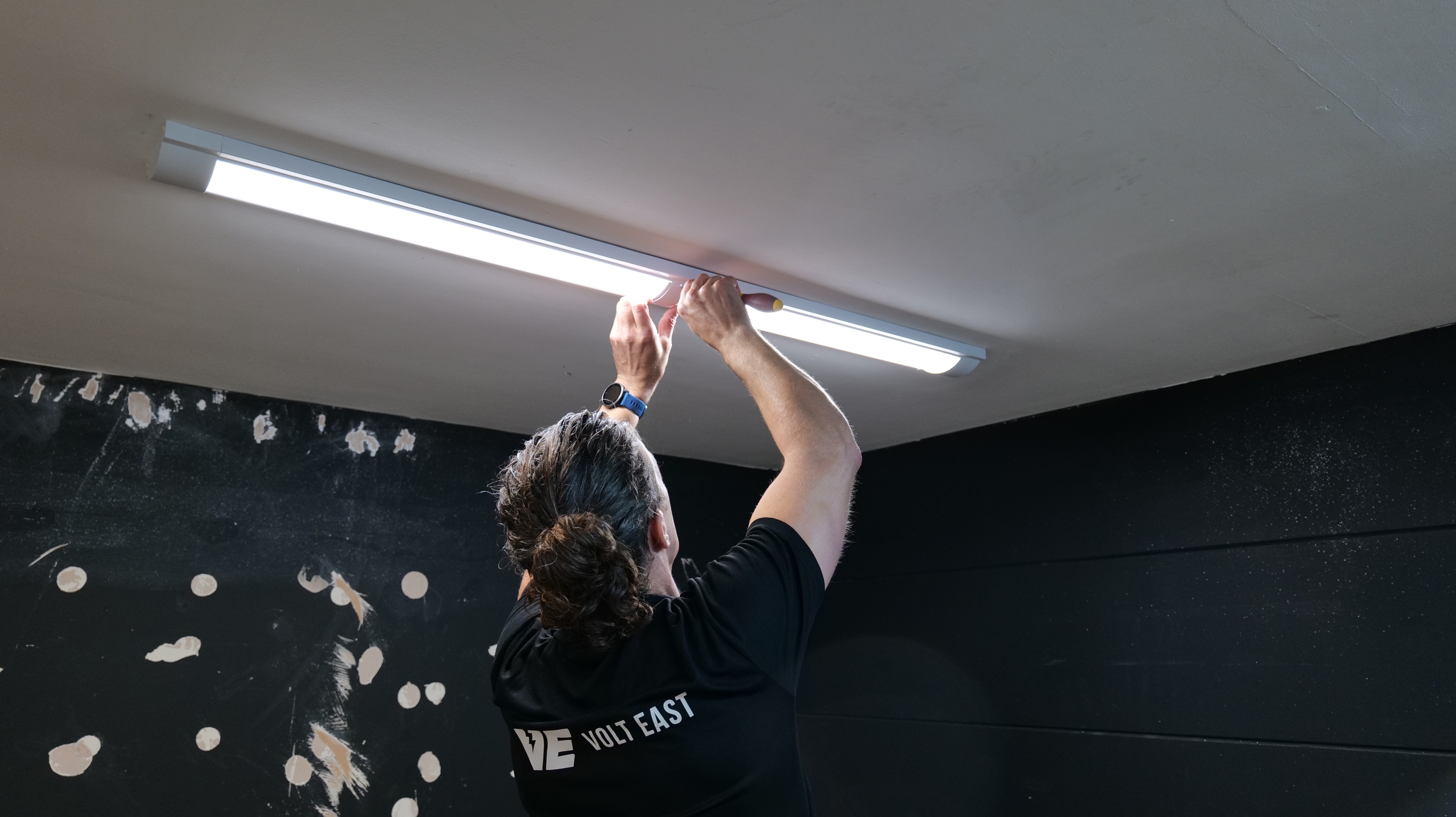
Smart lighting should make home life easier when the days are shorter, not turn every room into a gadget demonstration. The useful part is not being able to change a lamp from a phone; it is having well-planned light that suits the room, with controls that people will actually use. In a home around Havering, Essex or London, that usually starts with the lighting layout before it starts with an app.
Start with light, then choose the controls
A good scheme uses the right amount of light in the right place. Kitchens need clear task light at worktops, living areas benefit from softer layers, and halls need safe, simple illumination. Controls work best when they support that design. A single bright fitting with an expensive smart bulb is still a single bright fitting; a considered layout gives you options for comfort, focus and quieter evenings.
Three ways to make lighting smarter
Smart bulbs
Smart bulbs are often a straightforward option for a table lamp, a single decorative fitting or a room where the existing wiring is staying as it is. They can offer dimming, colour temperature changes, schedules and app control. They are less suitable when a conventional wall switch is regularly turned off, because the bulb then loses power and cannot respond until the switch is back on.
Smart switches and control modules
A smart switch or module can be the more natural choice for fixed ceiling lights because the familiar wall control remains useful. Depending on the fittings and circuit, it can manage dimming, switching and scenes without asking everyone in the house to use an app. Compatibility matters here: dimmable lamps, drivers and control equipment need to be selected as a working set rather than added one by one.
A wired multi-zone system
Efficiency without overpromising
LED lighting is usually the sensible foundation because it uses less energy than older lighting technologies and lasts longer when specified and installed appropriately. The Energy Saving Trust’s lighting guidance is a useful starting point for homeowners. The important point is that smart controls do not guarantee a particular saving. Their value is in helping lights run only when needed, at suitable levels, alongside efficient fittings and everyday habits.
Use dimming where a room needs more than one mood or task.
Use schedules for predictable routines, such as evening arrival or bedtime.
Use occupancy or daylight response where it suits the space and will not become irritating.
Winter comfort, routines and reassurance
In winter, a home is often used more heavily after dark. A gentle arrival setting can light the hall and kitchen without flooding the whole house. A calmer evening setting can lower the general light while keeping reading, cooking or stair routes practical. Away routines can make a home appear lived in by varying selected lights, but they should be treated as a modest supporting measure rather than a replacement for sensible security, locks or alarms.
Keep controls usable for everyone
The best system still works when a guest, child or family member reaches for the wall switch. Local manual control should remain obvious, with clear labels where a room has several zones. Apps, remotes and voice control are useful extras, but not the only way to turn a light on. A manual override is also helpful when a schedule or sensor does not match what is happening in the room.
Plan, test and commission before the finish
Before choosing products, walk through the house at dusk and note where light is genuinely needed, where glare is irritating and which routines repeat each day. That simple exercise produces a much better brief than a list of gadgets.
Lighting controls are part of the design process, not a final accessory. CIBSE’s guidance on the control of electric lighting describes control as a process that includes planning, specification, commissioning and handover. In practical terms, that means testing scenes at the right time of day, checking dimming behaviour, making sure the switches make sense, and showing the household how to use the system.
For a fixed lighting upgrade, VoltEast can help with lighting installation, wider home automation and sensible control planning. Our guide to smart lighting in 2026 is also useful if you are comparing a small room-by-room change with a broader project.
Short FAQ
Do I need smart bulbs in every fitting?
No. Many homes benefit from a mix of simple LED fittings, selected dimmable zones and a few smart controls where they add real convenience.
When should I involve an electrician?
Involve one when fixed wiring, new circuits, switches, modules, dimming equipment or a broader lighting layout are part of the plan. It is easier to assess compatibility and access before work begins.
Final thoughts
Smart lighting is most successful when it quietly supports daily life: useful light for the task, softer light for the evening, controls that remain simple and a layout that can adapt over time. If you are planning a lighting or home-control upgrade in Havering, Essex or London, speak with VoltEast about a practical scheme that fits your home rather than adding technology for its own sake.
Plan your next project with Volt East
Use our practical guides to prepare the brief, then speak to Volt East about electrical installation, lighting design, security or smart-home work across Romford, Essex and London.